
Gonzales noted for one of ‘most-charming town squares’ in Texas
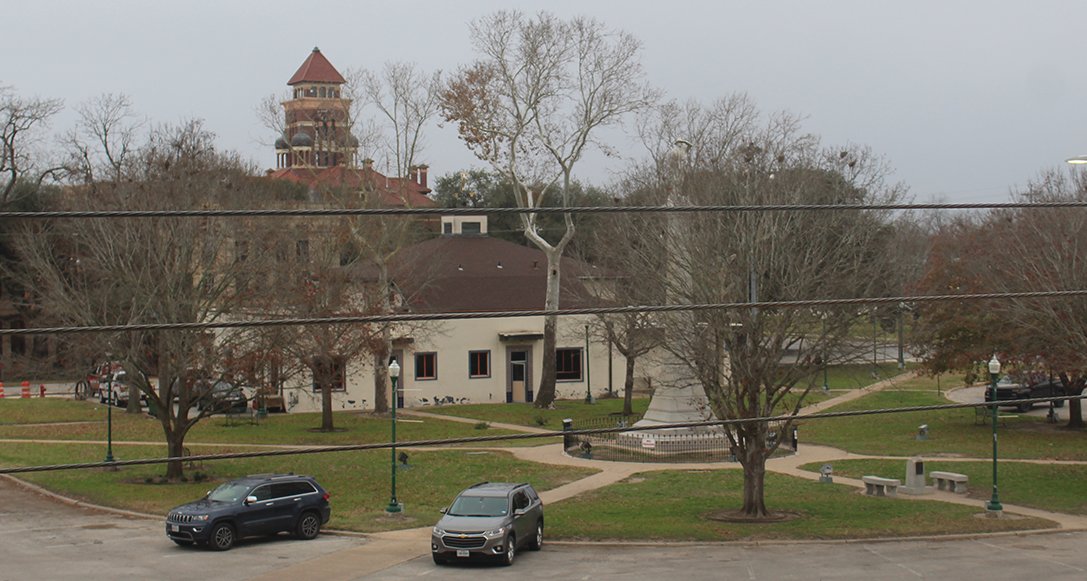
Four South Texas communities — including Gonzales — have been recognized by World Atlas — a website which contains not only maps but informative stories about destinations worldwide — as having some of the most charming town squares in the Lone Star State.
“Texas is a state of horizons, but its clearest stories fit inside a single city block,” World Atlas wrote. “For this list, the filter was practical, not nostalgic. Each square passed a simple test: a working public building on the edge, a place to sit without paying, a named independent spot to eat within 100 steps, and one small museum or library anchoring the history. The eight here show how varied that work can look.”
Gonzales was noted for occupying “a unique place in Texas history … the site of the first shot fired in the Texas Revolution.”
“The ‘Come and Take It’ cannon, now housed at the Gonzales Memorial Museum, marks that origin,” World Atlas wrote. “The town square itself remains unusually large, with the 1896 Gonzales County Courthouse centered in a broad oval of grass, oaks, and sidewalks, giving it more of a town park than a traditional square layout. The surrounding streets still follow the original 1830s Mexican land grant survey, creating wide boulevards rather than tight urban blocks. That spaciousness sets Gonzales apart from other towns its size.”
Restaurants La Bella Tavola and Running M Bar and Grill were noted for their proximity to the courthouse and their differing cuisines, with the former serving “chicken marsala and shrimp linguine in a narrow building with pressed-tin ceilings and tall windows” while the latter “offers ribeyes and cold beer with a view of the courthouse lawn.”
Other sites worth noting are the Gonzales County Jail Museum, which “keeps rusted keys, original cells, and law enforcement records” and Independence Park “a short drive down St. Louis Street, includes a pecan grove, fishing spots along the Guadalupe River, and WPA-era stone buildings still in use for local events.”
Also recognized from South Texas are Lockhart, whose “blocks move to the rhythm of smokehouses;” Goliad, whose square “sits within reach of a Spanish presidio and mission walls;” and Brenham.
Other communities include Boerne and Frederickburg in the Hill Country; Granbury in North Texas; and Jefferson in East Texas.
“Texas doesn’t hide its character on freeways; it keeps it on the square,” World Atlas wrote. “In these eight towns, history isn’t staged; it works a daily shift: courthouse clocks, theater marquees, smokehouses, river landings, mission walls, and creekside parks. Each block offers a seat, a story, and a plate of food within reach. Visit any one and the pattern becomes clear: civic space first, commerce second, memory threaded through both, in Texas.”


Comments